Antifight: A Modern Gothic Font with Old World Roots
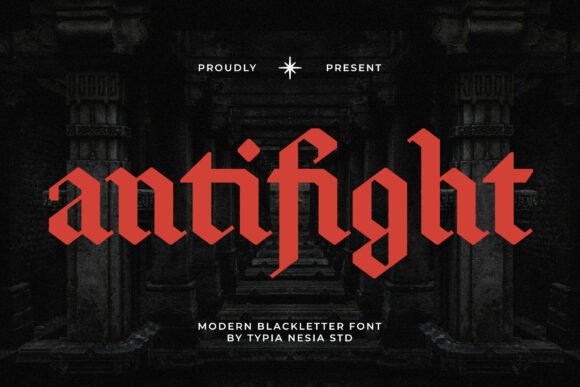
Finding a typeface that feels both ancient and utterly contemporary is a rare thing. Most fonts lean heavily into one era or the other, leaving you with something that reads as either a historical replica or a sleek, forgettable modern face. Antifight occupies a unique space. It’s a modern Gothic blackletter that doesn’t just mimic the past; it reinterprets it for today’s visual landscape. Think of it as the visual equivalent of a medieval blacksmith’s hammer striking a sheet of modern steel—the core strength is timeless, but the edge is sharp and new.
This font is built on the bones of Old English and Gothic script, but it has been stripped of excessive, fussy detail. The letterforms are bold, angular, and structured with a strong geometric underpinning. You’ll notice the sharp, dramatic strokes and the confident negative space, but you won’t find the illegible, overly ornate swirls that can make traditional blackletter fonts a challenge to read at smaller sizes. This balance is key to its versatility. It delivers the visual weight and historical gravity of a classic blackletter while maintaining the clarity needed for modern design applications, from a band logo to a game title splash screen.
Where Antifight Finds Its Voice
The personality of Antifight is unapologetically bold and dominant. It’s a typeface that doesn’t ask for attention; it commands it. This makes it a natural fit for projects where the goal is to make an immediate, powerful impression. In the world of music and entertainment, it’s a perfect match for album artwork, band merchandise, and festival posters, especially for genres like metal, hardcore, and punk where the aesthetic is rooted in intensity and rebellion.
Beyond music, its applications are surprisingly broad. Consider these real-world uses:
- Branding & Logo Design: For brands that want to project strength, heritage, or a touch of the avant-garde. Think craft breweries, custom motorcycle shops, tattoo studios, or high-end streetwear labels. A logo set in Antifight immediately sets a tone of seriousness and craftsmanship.
- Digital & Editorial Design: Use it for impactful headlines on websites, blog post titles, or chapter headings in digital magazines. It creates a strong visual hierarchy, drawing the reader’s eye exactly where you want it. In web design, it can be a striking hero element for a landing page.
- Packaging & Print: On product packaging, especially for limited editions or specialty items, Antifight can elevate the perceived value. Imagine it on a black label for a premium whiskey or a dark-themed coffee bag. For print, it’s excellent for event flyers, poster art, and bold editorial layouts.
- Esports & Gaming: The font’s aggressive yet clean structure is ideal for team logos, tournament branding, in-game UI elements, and streaming overlays. It communicates competition and a fearless spirit without sacrificing legibility on screen.
- Personal Projects: For crafters and hobbyists, it’s a fantastic asset for creating custom vinyl decals, apparel designs, or unique stationery that stands out from generic offerings.
Practical Guidance for Using a Powerful Font
Working with a display font like Antifight requires a bit of strategy. Its strength is its visual impact, but that same strength can overwhelm a design if not used thoughtfully. Here’s how to get the most out of it.
Pairing for Balance
The most important rule is contrast. Antifight is a high-contrast, decorative display font. Pair it with a simple, neutral sans serif font for body text or secondary information. A clean grotesque or a geometric sans serif works beautifully. This pairing creates a clear visual hierarchy: Antifight grabs attention for the headline or logo, while the sans serif ensures readability for longer passages. Avoid pairing it with other ornate serif fonts or complex script fonts, as this will create visual noise and confusion.
Readability and Hierarchy
Use Antifight sparingly and for short bursts of text. It’s not designed for paragraphs. Its primary role is as a display font for titles, headers, logos, and pull quotes. Always test it at the intended size and on the intended medium. A font that looks magnificent as a 100pt headline on a poster might lose its crispness as a 24pt title on a mobile screen. Check the clarity of individual letterforms, especially at smaller scales or when viewed on low-resolution displays.
Evaluating Fit and Licensing
Before committing, ask yourself: does this font’s personality align with my project’s core message? If your brand is about soft, approachable minimalism, Antifight is likely not the right tool. But if you’re communicating strength, tradition, rebellion, or a dark, premium aesthetic, it’s worth serious consideration.
When you download Antifight, review the full character set and any included styles (like italics or alternate characters). This helps you understand its full potential and ensures it has the glyphs you need for your project, such as specific punctuation or accented characters for multilingual support. Crucially, always verify the commercial font license. Understand the terms for your intended use—whether it’s for a single client project, unlimited commercial use, or for creating physical products for sale. Respecting the licensing protects you and supports the type designers who create these valuable design assets.
Ultimately, Antifight is more than just a collection of vectors. It’s a tool for building a specific kind of brand identity—one that is rooted in history but built for the present. Used with intention, it can transform a standard project into something with genuine presence and a story to tell. It’s a premium font that rewards thoughtful application, giving your work a voice that is both classic and decisively modern.