Cute Fish: A Playful Dingbats Font for Aquatic Themes
Finding the right design asset can completely transform a project. When you need more than just letters—when you need actual imagery to build a theme—the Cute Fish dingbats font steps in as a surprisingly versatile tool. It's a premium font collection that swaps out standard alphabet keys for a charming set of aquatic symbols. Think of it not as a typeface for writing sentences, but as a curated library of vector graphics accessible right from your keyboard. This approach allows designers, crafters, and entrepreneurs to integrate consistent, themed illustrations into their work without needing advanced illustration software or skills.
More Than Just Letters: The Visual Appeal of an Aquatic Typeface
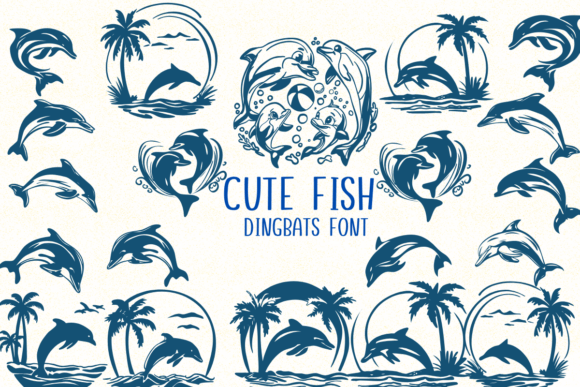
What makes Cute Fish stand out is its personality. The illustrations within the font are rendered in a friendly, rounded style that feels welcoming and cheerful. You won't find hyper-realistic fish here; instead, you'll discover a school of charming characters—whimsical seahorses, smiling starfish, playful bubbles, and decorative coral. This particular style makes it an excellent creative font for projects aimed at families, children, or anyone looking to evoke a sense of fun and relaxation. The consistent line weight and cohesive aesthetic across all the glyphs ensure that any combination of symbols will look like they belong together, which is a fundamental principle of solid brand identity.
As a display font, its strength lies in its ability to capture attention through imagery rather than typographic form. While a serif font conveys tradition and a sans serif font suggests modernity, a dingbats font like Cute Fish communicates a specific theme instantly. It serves as a foundational design asset for visual storytelling. The overall appeal is one of lighthearted creativity, making it a fantastic choice for projects where a standard script font or handwritten font might feel too formal or out of place.
Where to Deploy Your Aquatic Imagery: Practical Applications
The true value of a font like this is in its application. Its utility spans a wide range of creative and commercial projects. For packaging design, imagine using the fish and shell symbols to create a border for seafood products, a bath bomb label, or a children's swimwear tag. In editorial design, the icons can break up text in a marine biology newsletter, act as bullet points in a beach vacation blog, or add flair to a cookbook focused on coastal cuisine.
For logo design and brand identity, a single, well-chosen glyph from Cute Fish can become the cornerstone of a brand mark for a pet store, a scuba diving school, a sushi restaurant, or a children's party planning service. The symbols are simple enough to be recognizable even when scaled down for social media graphics or a website favicon. This is where modern typography meets practical branding; you're using a typeface as a source of consistent, scalable vector art.
The applications extend deeply into the personal and DIY space as well. Crafters can use Cute Fish to generate cut files for vinyl decals, create unique stamps for scrapbooking, or design themed embroidery patterns. For wedding invitations with a nautical or beach theme, the font offers delicate decorative elements like anchors, waves, and small fish that can frame text or serve as motifs on RSVP cards. It turns DIY projects from homemade to professionally polished with minimal effort.
Integrating Cute Fish into Your Design Workflow
Adopting a dingbats font effectively requires a bit of strategy. First, evaluate the project fit. Cute Fish is ideal for themes centered on water, the ocean, summer, and play. It might not be the right choice for a law firm's annual report, but it's perfect for a daycare's newsletter. A key part of using any premium font is understanding its context.
Next, consider font pairing. Since Cute Fish provides the imagery, you need a strong typographic partner for any body text or headlines. A clean sans serif font often works best, as it provides a neutral, readable foundation that lets the aquatic symbols shine. A simple serif font could also work for a more classic, elegant coastal feel. The goal is balance; let the dingbats be the star and the supporting typeface be the stage.
Before you begin, always review the font's character map to see all the available styles and symbols. You might be surprised by the variety—perhaps there are different fish species, decorative frames, or punctuation marks you didn't expect. This helps in planning your layout. For readability, use the symbols as large headings, decorative borders, or icons, not as a substitute for paragraph text. Their visual weight is designed for impact, not for long-form reading.
Finally, for any commercial use—whether it's for a client's logo, merchandise for sale, or web design assets—confirm the licensing. A reputable commercial font will have a clear license that allows for these uses. By treating Cute Fish as a professional design asset and integrating it thoughtfully, you can add a unique, thematic layer to your work that resonates with your audience and elevates your creative output.