Solitude: A Font That Radiates Warmth and Whimsy
In the vast sea of digital typefaces, finding one that genuinely feels like a friend can be a challenge. We often search for fonts that are professional, yet personable; unique, yet legible. Enter Solitude, a delightful display font that doesn't just sit on the page—it interacts with it. Brimming with charm and a distinct sense of whimsy, Solitude offers a refreshing departure from the rigid geometric sans serifs and overly formal serifs that dominate modern typography. It is a typeface with a friendly demeanor, designed to evoke a sense of camaraderie and joy. If your project requires a voice that is approachable and cheerful, this creative font might just be the missing piece in your design assets library.
The Visual Personality of Solitude
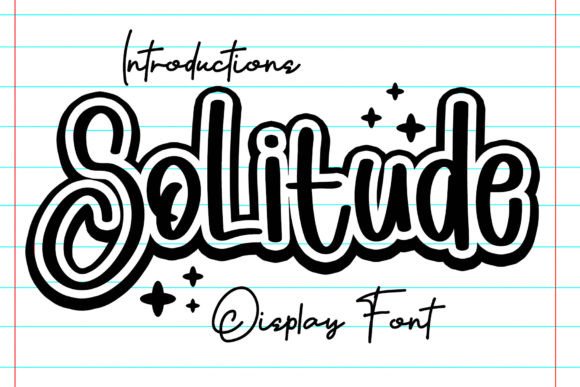
When we talk about the "personality" of a typeface, we are referring to the emotional response it triggers in the viewer. Solitude is a masterclass in visual friendliness. Its playful curves suggest movement and energy, but it avoids the chaotic look of some script fonts. Instead, it balances that energy with a stable baseline, ensuring that it remains readable while maintaining its whimsical edge. This isn't a font that demands attention through sheer volume; it draws you in through warmth. It feels like the typographic equivalent of a handwritten note from a close friend—intimate, sincere, and full of character.
From a design perspective, the construction of Solitude leans into soft, rounded terminals and open apertures. These features are not just aesthetic choices; they are functional elements that enhance readability, particularly at larger display sizes. While many decorative fonts sacrifice legibility for style, Solitude manages to walk the line between the two. It is a premium font that feels custom-crafted for projects where the audience connection is paramount. Whether you are working on a logo design for a cozy café or layout for a lifestyle blog, the visual weight of Solitude is light enough to be airy but substantial enough to hold its own.
Where Solitude Shines: Practical Applications
Choosing the right typeface is often about context. A font that works beautifully on a wedding invitation might fail miserably on a technical manual. Solitude, however, finds its sweet spot in a surprisingly wide array of creative scenarios. Its inherent cheerfulness makes it an obvious candidate for children’s books and educational materials, where a playful tone can help engage young readers. The rounded, soft letterforms are non-threatening and inviting, encouraging interaction rather than intimidation.
Beyond the realm of publishing, consider the impact of Solitude in packaging design. Imagine a line of artisanal jams, organic teas, or handmade soaps. The packaging needs to communicate care, quality, and a personal touch. Using a standard corporate sans serif here would feel cold and disconnected. Solitude, on the other hand, bridges that gap between commercial viability and artisanal authenticity. It tells the customer, "This product was made with love."
For event planners and marketers, this font is a natural fit for party invitations, greeting cards, and flyers. It possesses an inherent festive quality without being garish. In the digital space, Solitude can transform social media graphics. In a feed dominated by bold, shouting headlines, a caption or overlay text set in Solitude offers a moment of visual relief—a friendly wave amidst the noise. It works exceptionally well for quotes, lifestyle tips, and community engagement posts where the goal is to start a conversation rather than just sell a product.
Strategic Font Pairing and Brand Identity
No font is an island, and even the most charming typeface needs the right companions to build a cohesive brand identity. When working with a display font like Solitude, the goal is to pair it with something that complements its personality without competing for attention. Because Solitude has such a strong voice, it pairs best with neutral, clean typefaces.
For a classic, balanced look, try pairing Solitude with a clean sans serif font like Montserrat or Lato for your body text. The simplicity of the sans serif allows the whimsy of Solitude to take center stage in headlines and logos, while ensuring the main content remains highly readable. Alternatively, for a more editorial or sophisticated vibe, you could pair it with a modern serif font. The contrast between the playful, hand-drawn feel of Solitude and the structured elegance of a serif creates a dynamic visual hierarchy that guides the reader’s eye effortlessly.
It is important to remember that Solitude is a display font. This means it is designed for impact, typically at larger sizes. You wouldn't want to set an entire paragraph of body copy in Solitude; the decorative nature of the letterforms would make reading long blocks of text tiring. Instead, use it strategically for headers, pull quotes, logos, and call-to-action buttons. By using it sparingly, you maintain its impact and ensure that every time a viewer sees it, they associate it with the warmth and joy you intend.
Technical Evaluation and Licensing
Before integrating any new font into your workflow, a practical evaluation is necessary. First, consider the readability at your intended size. Test Solitude on various devices—desktop monitors, tablets, and smartphones. Display fonts can sometimes lose their detail on lower-resolution screens, but a high-quality premium font usually holds up well.
Next, check the available styles. Does the font family include multiple weights or italic versions? Having a variety of styles within the same family gives you more flexibility to create hierarchy without introducing a second typeface. For example, using a "Bold" weight for main headings and a "Regular" weight for subheadings creates a cohesive look.
Finally, and perhaps most importantly for entrepreneurs and business owners, is the commercial licensing. This is a step many hobbyists overlook, but for professional use, it is non-negotiable. Ensure that the license covers your specific use cases, whether that is for print-on-demand merchandise, digital products, or client work. Respecting licensing not only keeps you legally compliant but supports the type designers who pour their creativity into creating assets like Solitude.
In conclusion, Solitude is more than just a collection of letters; it is a design tool capable of transforming the tone of a project. By choosing this font, you are choosing to inject your work with personality, approachability, and a distinct sense of happiness. It is a versatile asset for anyone looking to create designs that feel human, connected, and undeniably cheerful.